
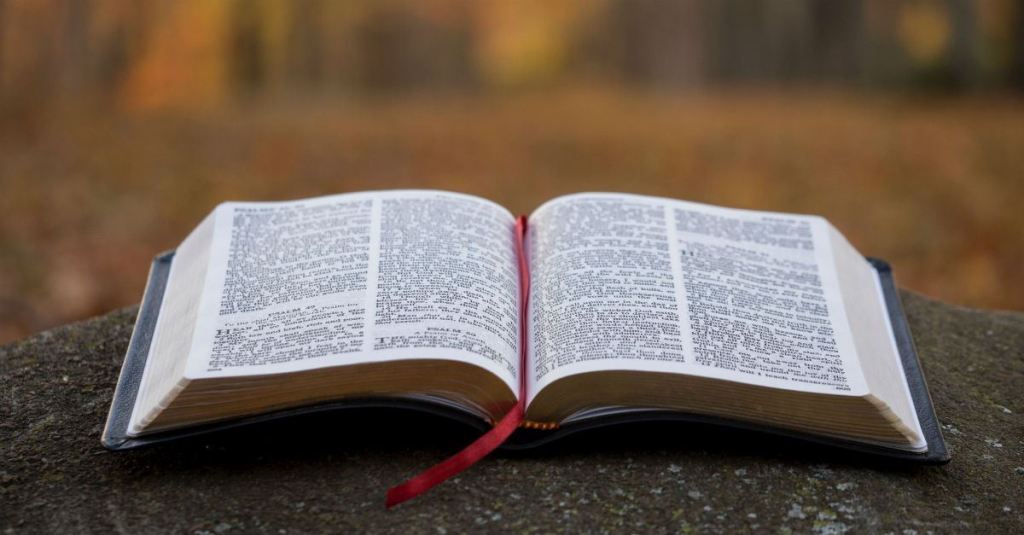
It’s one of the most debated questions of our times, isn’t it? For some, the answer is easy; for some, it is a bit more complicated. The reality is that no matter our beliefs about what the Bible is, we are probably only partially correct. And this is really, really important, because like it or not, no matter who we are, what we think about the Bible determines the way that we interact with both it and the world.
You see, the narrative that we tell ourselves about the Bible dictates the way that we see the world outside of it. If it is all nonsense, a fairy tale from a time long ago, we must see those whose life revolves around it as misguided at best. However, if the Bible is God’s word, which was hand-delivered out of heaven to inform us of our wretchedness, then that’s a whole different story. It creates an entirely different set of assumptions about the world.
I find that both of these black and white ideas about the Bible leave much to be desired. They honestly miss the entire point about the Bible. They leave us with only two options: intricate yet naive fairytale, or divine, flawless history/science/law book. The Bible is neither, nor does it claim to be either. So what exactly is it that I am proposing, because I may have just made you really uncomfortable. I believe this: The Bible is a divinely inspired and authoritative story that leads people to Jesus.
What do you even mean by that?
Listen, I’m not here trying to play word tricks on you. You probably read “divinely inspired and authoritative story” and thought that sounds the same as God’s word dropped out of heaven. But I promise you that’s not what I’m getting at. I believe that biblical authors were inspired by the Holy Spirit to write down important events and ideas that existed in the cultural memory of ancient Israel. This cultural memory was written down over a variety of different literary genres such as narrative, poetry, and discourse. Then that same spirit inspired the early church to record the life of Jesus and the first 100 years of church history. And the beautiful thing about this is that throughout 66 books and a multitude of different literary styles, we are given a single story. It’s a story about God, and it starts out on page 1, saying, “In the Beginning” (Gen. 1:1), and ends on the final page saying “forever and ever” (Rev. 22:5).
The fact that this story has shaped not only individual lives but also the course of history testifies to its authority. But even if you can’t bring yourself to put faith in God’s inspiration of the words, you must still wrestle with the truth of the biblical message. The Bible doesn’t just tell a story about God. It also tells us a story about the world and a story about ourselves. It tells us a story about the human desire for power and knowledge. A story about how those desires have time and time again perverted the created order and unleashed chaos in the relationships between humans and creation, humans and one another, and humans and themselves.
What’s in a Story?
The Bible tells us a story that we see in our world. It tells us a story that we see in our own lives. It tells us a story that, if we are honest with ourselves, we see in our own hearts. Power structures, broken relationships, genocides, exile, slavery, and injustice all culminate in a single theme of hope being restored through God’s faithfulness to his people Israel, and then to all people through the coming of Jesus.
The story has authority because it speaks to us. The story has power because it is true. Yes, the facts may not all be right, but the story is still valid. How many of us have built our lives around the narratives that we have read or watched? Lord of the Rings, Harry Potter, the Marvel Cinematic Universe… Disney, have taught us real-life lessons on loyalty, human nature, love, evil, and goodness. All of them are fantasy. All of them are true. What I’m trying to illustrate here that facts don’t equal truth.
I am not saying that I think the Bible is fantasy, I don’t. But I’m also not saying that every single detail is a scientific or historical fact. What I have found is that, despite its contradictions and questionable historical veracity, the Bible is as true for us today as it was for the people of Israel and the early church. It is a story that we find ourselves in because it is very much our story.
So What?
The Bible communicates the heart of God to us. But it does not always make much sense to 21st century Americans. It depicts events from thousands of years ago in a place thousands of miles away. A simple literal reading of the words just isn’t good enough. It requires study and practice to comprehend.
With that all being said, it is not as cryptic or hopeless as it may seem. The story of Jesus reveals to us the heart of God. And this knowledge of God’s great love for the world and his people helps us to understand the entire story of the Bible – good, bad, and ugly. It is filled with undertones and overtones of a God who turns the world upside down by stepping into human history to show us that there is a different way.
The evil that arises from humanity’s desire to exalt themselves as gods will some day be defeated. The power structures that we erect and use to exploit the less fortunate will be rendered powerless. Meanwhile, the earth that we have failed to care for will be remade. The God whom we have mocked will continue to accept us as beloved children. Our brokenness will be repaired. The promise of a new kingdom will come. This isn’t just any old story. It is the ultimate story that answers our most desperate questions. Why are we here, and what are we doing? Is this all worthless, or does it matter? Who am I? This is the story that the Bible tells. It is God’s story, it is our story, but it is only a glimpse of what is to come.

 Grace and Recovery
I’m not wise like you are, but also agreed upon what you think too. I also think that those scholars that wrote the book and re write the book have to study the human nature in order to wrote a book that could be fitting into our lifes during our down lifes, and yes the book is just like any other book until we bring it about to life..and yes it does started out with in the beginning…what beginning, if nobody is here but GOD, so apostle john said in the beginning, was the word, what word?, if GOD is the only one exist during the beginning, so it goes on and say in the beginning, was the word, and the word is GOD, and the word manifest in to human form, well, if GOD and he is the creator, he must be the one spoken about the wotd, cause ain’t nobody was here but HIM, so he brought the word and make the word manifest in human forms, and i think the bible talks about jesus more than it mentions God, from my vanish point Jesus is the highest exponents of the whole scriptures, he is (presentence) the perfect example of the word, according to the book Jesus said follow me, where are we following him to..than he said, be yea perfect as I am perfect, Jesus speaking in the book, then he said, whatsoever I hear thats I speak, and he said and whatsoever he command me to do, thats I do.. So I think that we need the hearing of the word so the book can become meaningful to the human nature, cause word only comes from human, so i think we need to understand us first, than we can understand the nature of that book call BIBLE.
LikeLike
Another good one Tim. We did a series of Jen Wilkins bible studies in our women’s group starting at the very beginning. I was amazed at how the Bible is all connected with the same points repeated to get through our lack of understanding. Jen Wilkins constantly tells us that the Bible is a book about God and that is true. He is ever faithful, loving, kind and patient. Hoping to spend more time studying his word this year. Jen Wilkins said “if you take a math class, you can’t open the book to the middle to understand it”.
LikeLike